Pasting Your Way to Mediocrity: How Snippet Dependency Stunts Developer Growth
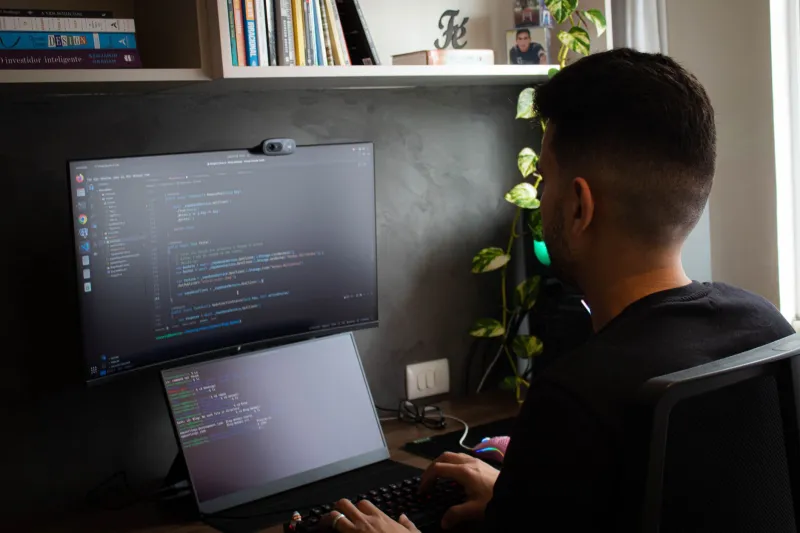
There's a specific kind of confidence that comes from hitting Ctrl+V. You found the code, it works, the tests pass, and you're moving on. Clean. Efficient. Done.
Except — were you? Or did you just borrow someone else's understanding and call it a win?
This isn't a purist rant against using resources. Every working developer pulls from Stack Overflow, digs through GitHub Gists, and maintains some form of personal snippet library. That's table stakes at this point. The problem isn't that you're reusing code. It's how — and more importantly, what it's costing you when the habit quietly takes over.
The Illusion of Productivity
Copy-pasting code feels fast because it is fast — in the moment. You skip the struggle, dodge the documentation, and sidestep the mental overhead of actually reasoning through a solution. The task gets checked off. Velocity looks good on paper.
But here's what's happening under the hood: you're accumulating what some engineers call borrowed knowledge debt. You've shipped code you don't fully understand into a codebase someone — maybe future you — has to maintain. That regex pattern you grabbed for email validation? The async handler you found on a five-year-old Gist? They work until they don't, and when they break, you're back at square one except now there's a production incident involved.
The psychology behind this is pretty well-documented. Our brains are wired to take the path of least resistance, especially under deadline pressure. When you find a snippet that solves your immediate problem, your brain registers a small dopamine hit. Task complete. Move on. The deeper cognitive work — understanding why the solution works — never gets triggered because it doesn't feel necessary.
Over months and years, that pattern compounds.
What You're Actually Skipping
When you paste without understanding, you're not just skipping a few minutes of reading. You're skipping the part of development that actually makes you better.
Consider what happens when you do work through a problem from scratch, even imperfectly. You encounter edge cases. You make decisions about data types, error handling, and performance tradeoffs. You build a mental model of the problem domain. That model is transferable. It shows up the next time you face something similar, and the time after that.
Snippets bypass all of that. They hand you an answer without the map that got you there.
This is especially damaging for developers in the early-to-mid stages of their careers. Junior devs who lean heavily on snippet reuse often plateau faster than their peers. They can execute familiar patterns confidently but struggle when a problem requires novel thinking — because they've never really practiced novel thinking. They've practiced finding and adapting existing solutions, which is a different skill set entirely.
The Technical Debt You Don't See Coming
Beyond personal growth, snippet dependency creates real structural problems in codebases.
Snippets are written in a specific context. A Stack Overflow answer from 2019 might solve a problem elegantly for Node 10, but it might also introduce subtle security issues in a modern environment. A utility function pulled from a blog post might not account for the specific data shapes your application uses. These aren't hypotheticals — they're the kinds of things that turn into late-night debugging sessions months after the code was shipped.
There's also the consistency problem. When multiple developers on a team are each pulling snippets from different sources, you end up with a codebase that solves similar problems in five different ways. That's not just an aesthetic issue — it's a maintenance nightmare and an onboarding nightmare, and it often signals that the team lacks shared understanding of core patterns.
A Better Framework: Snippets as Study Material
Here's the reframe that actually helps: treat every snippet you use as the beginning of a learning loop, not the end of a problem-solving one.
Before you paste anything into production code, run it through this quick mental checklist:
1. Can you explain it line by line? Not to impress anyone — just to yourself. If there's a line you can't explain, that's your cue to dig in. Pull up the docs, trace the logic, understand what that line is actually doing.
2. Does it handle your edge cases? The snippet was written for someone else's problem. Map it explicitly to yours. What happens with null values? Empty arrays? Unexpected input types? Don't assume the original author thought about your specific use case.
3. Is there a simpler version you could write yourself? Not always — sometimes a well-tested utility library is genuinely the right call. But ask the question. Writing a simplified version from scratch, even if you ultimately use the snippet, forces the understanding that copy-pasting skips.
4. Would you be comfortable explaining this in a code review? If the answer is no, you're not done with it yet.
Building a Snippet Library That Actually Helps You Grow
Snippet libraries aren't inherently bad. A well-maintained personal library of code patterns you understand is genuinely useful — it's accumulated knowledge in a reusable format. The key word is understand.
When you add something to your library, write a brief comment explaining what it does, why you'd use it, and any gotchas you've encountered. That annotation process forces comprehension. It also makes your library dramatically more useful six months later when you can't remember the context.
For teams, the same principle applies at scale. A shared snippet library with documented context, reviewed code, and clear ownership is a knowledge asset. A shared snippet library that's just a pile of things that worked once is a liability.
The Long Game
The developers who consistently level up aren't the ones who find answers fastest. They're the ones who understand what they build deeply enough to adapt, debug, and improve it — and to explain it clearly to the person sitting next to them.
Snippets and external resources are part of the job. Nobody's out here writing everything from scratch, nor should they be. But there's a real difference between a developer who uses snippets as a starting point for understanding and one who uses them as a substitute for it.
The next time you're about to paste, pause for sixty seconds. Read the code. Ask why it works. That sixty seconds, repeated consistently, is the difference between a developer who's still doing the same job in five years and one who's grown significantly past it.